
Northern Exposure – Historic Aurora Film Digitizer
Overview
Northern Exposure is a high-precision film digitizer designed to scan archival 35 mm aurora footage from the 1950s–1960s for scientific research. The University of Alaska Fairbanks and the Geophysical Institute hold thousands of historic reels, but professional digitization costs exceed $600,000. Our engineering team set out to design a low-cost, accurate, desktop-scale alternative.
I was responsible for all motion subsystems, including the feed sprocket, film transport, tensioning system, motor control, limit-switch logic, radius-measurement algorithms, and synchronization between three stepper motors.
The final device meets scientific requirements of ±50 µm frame accuracy, maintains constant tension across the entire film path, and completes scans at up to 800 frames per hour.
System Overview
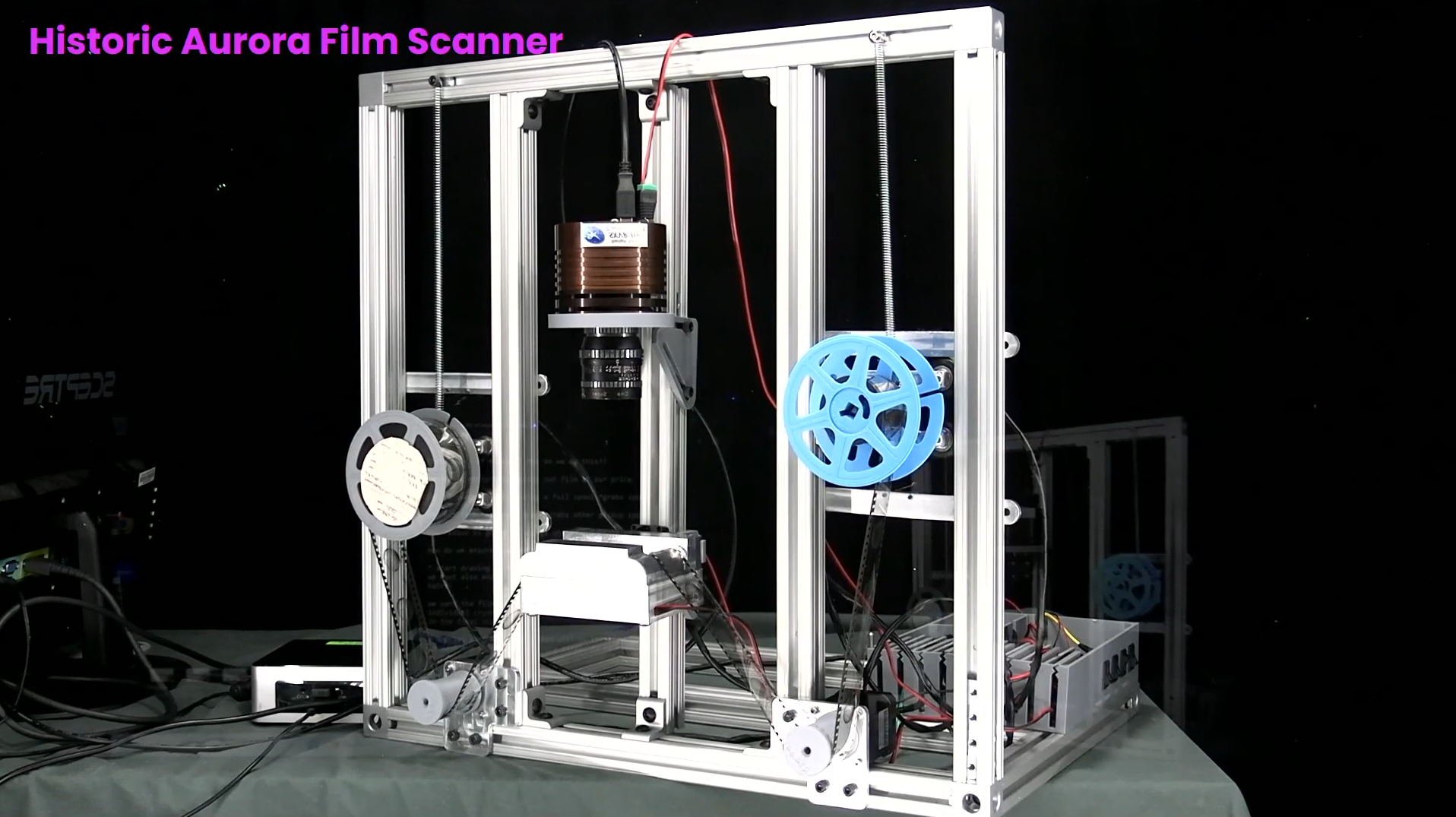
Team presentation showing the historic aurora film digitizer prototype.
The system includes:
- A modular aluminum extrusion frame
- A Starlight Xpress SXVR-H9 astrophotography camera
- Custom sprocket-driven feed mechanism
- Automated reel tensioning with limit-switch feedback
- Adjustable camera carriage and linear rails
- Arduino-based motor control
My primary responsibility was ensuring that every frame was advanced accurately, consistently, and without damaging the film.
Motion System Design (My Role)
The core challenge of Northern Exposure is achieving reliable, repeatable frame advancement while maintaining stable tension. I designed and implemented:
- Precision feed sprocket for frame indexing
- Dynamic reel-radius compensation
- Tensioning subsystem using springs + limit switches
- Limit-switch calibration routines
- Reel centering and auto-halt logic
- Synchronized multi-motor control
- Stepper driver firmware using an Arduino + CNC Shield
1. Precision Feed Sprocket – Frame Indexing
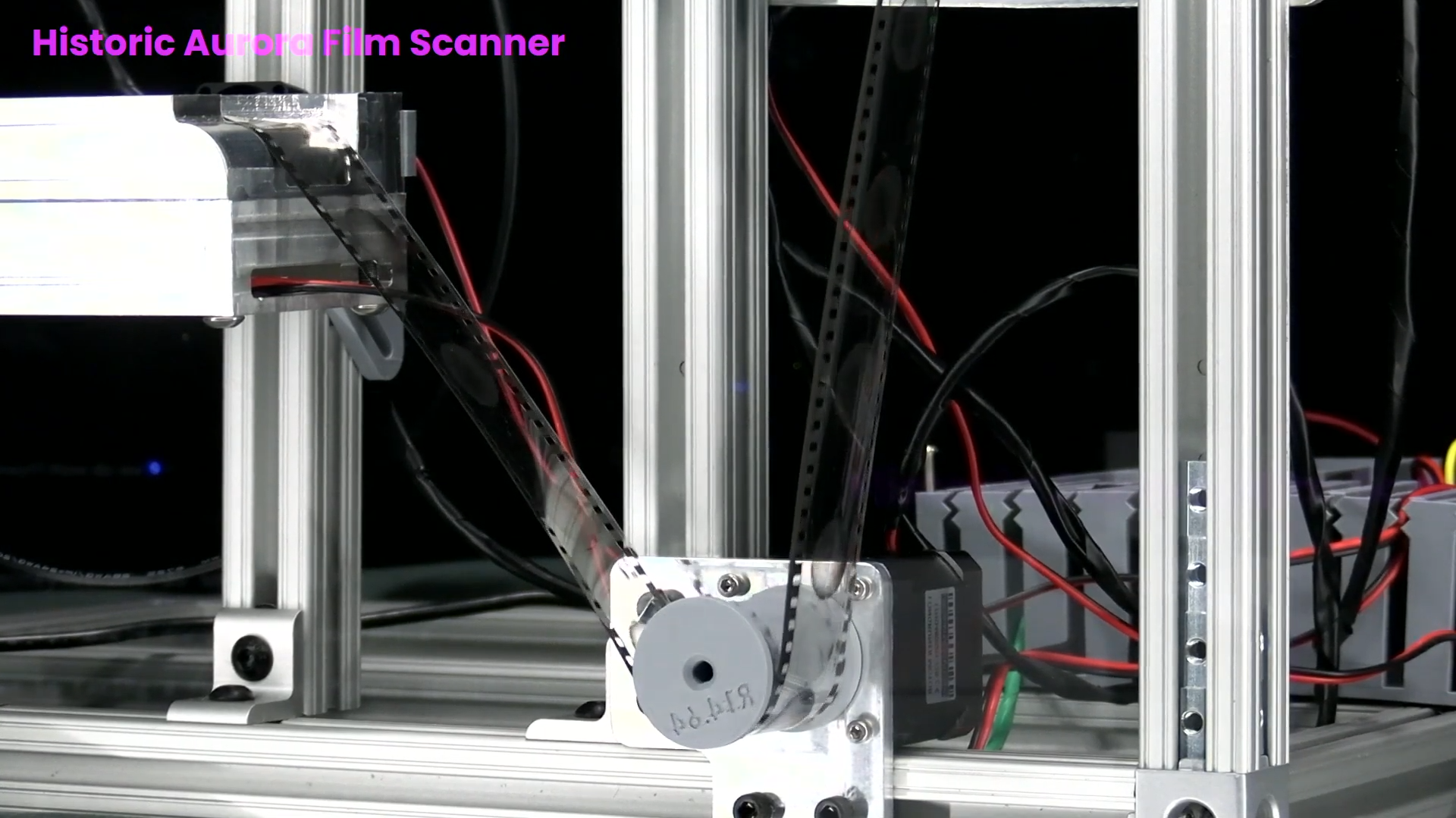
The film is advanced using a custom sprocket that indexes one frame per 40 microsteps. Testing confirmed:
- ±23 µm per microstep
- ±50 µm frame-to-frame accuracy
- Zero drift across long multi-reel scans
This precision is essential because auroral research depends on accurately comparing boundaries and structures across frames.
2. Reel Tensioning & Dynamic Radius Compensation
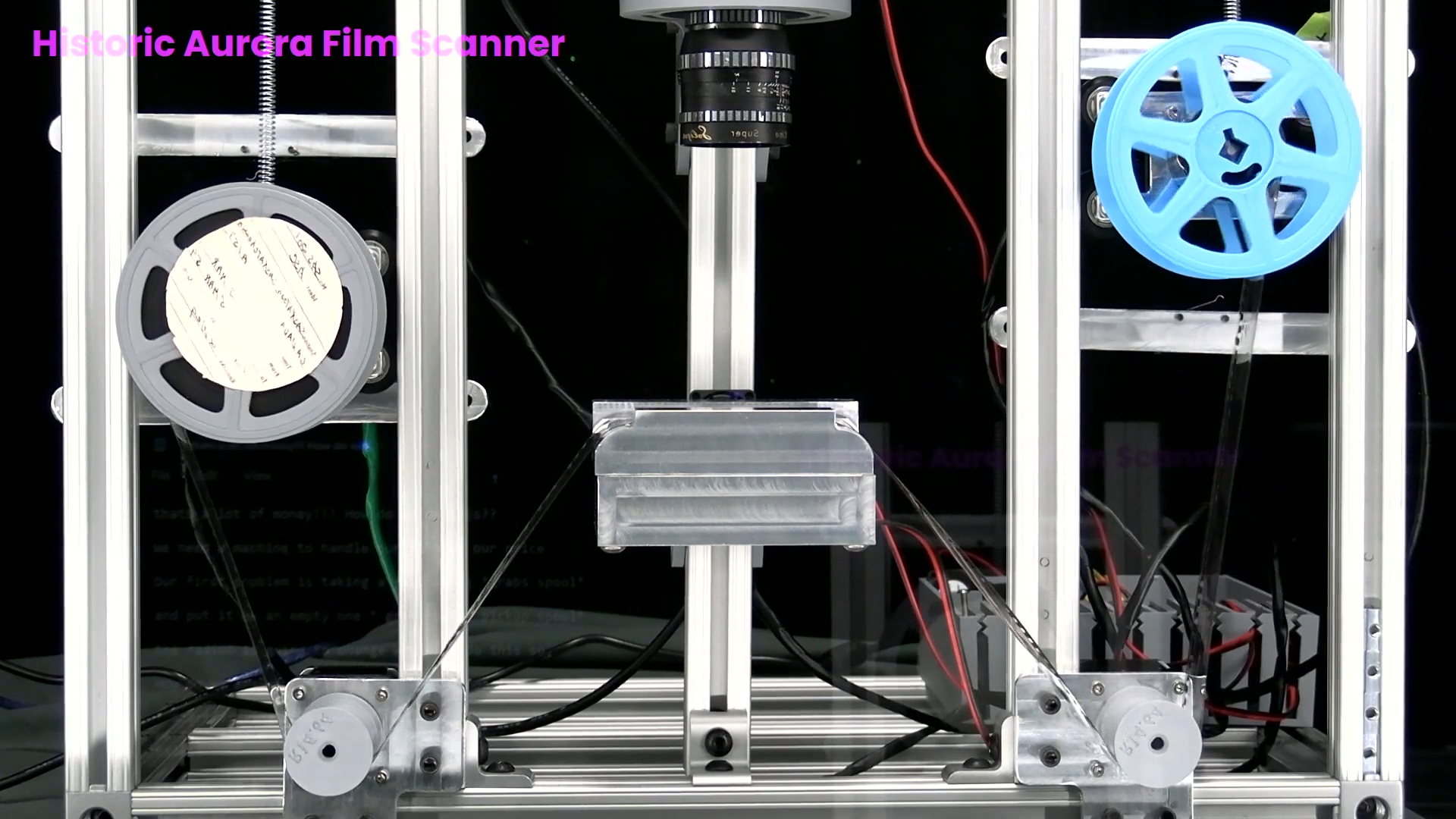
A unique problem in film scanning is that the reel radius changes continuously as film winds on and off the spool. If both motors run at a fixed speed:
- Tension spikes → tearing risk
- Tension slackens → film warps and misaligns
- Camera focus plane shifts → unusable scans
My solution
I developed a dynamic radius-tracking system using:
- Limit-switch calibration
- Known travel distances
- Step counting to calculate arc length
- Radius computation to adjust reel speed in real time
The result is smooth, constant tension throughout the full scan.
3. Limit-Switch Logic & Safety Systems
To prevent damage to fragile historic film, I implemented:
- Zeroing routines
- Soft mechanical/electrical bounds
- Auto-halt on abnormal tension events
- Reel-recovery and re-centering logic
These systems made the scanner robust for long unattended digitization runs.
4. Multi-Motor Synchronization
The film path relies on three independent stepper motors:
- Feed motor — micro-stepped frame advance
- Uptake motor — speed varies with reel radius
- Input motor — counterbalances uptake to avoid slack
Custom step-timing ensured:
- Smooth acceleration
- Eliminated surges
- Synchronized reel motion
- Accurate coordination with the sprocket
Results
Achieved:
- ±50 µm frame accuracy (meets scientific requirement)
- Stable tension across full reels
- Reliable long-duration scans
- Complete integration between mechanics, electronics, and camera subsystem
Enables:
- Recovery of 1950s–60s aurora footage
- Research on auroral morphology, boundary motion, and historical space weather
- Potential extension to other archival film datasets